The Process of Naturalization
Naturalization is the process of granting citizenship privileges and responsibilities to foreign-born residents. Immigrants to the United States have never been required to apply for citizenship. An immigrant could become a citizen anytime after they arrived in the United States as long as they were residents in the United States for the required period of time. Of those who applied, many did not complete the requirements to become a citizen.Prior to 1906, there was no federal oversight for the issuance of certificates of naturalization. Early naturalization laws allowed any "court of record" (municipal, county, state, or federal) to grant United States citizenship and did not even require courts to issue certificates. Without statutory instruction or administrative oversight, certificates of naturalization issued prior to September 27, 1906, varied in size, shape, design, and even contents, with many omitting biographical information. This led to large numbers of naturalization fraud cases across the nation.
The Naturalization Act of 1906
Congress passed the Basic Naturalization Act of 1906, which created the Bureau of Immigration and Naturalization and put it in charge of “all matters concerning the naturalization of aliens.” Under the act, which took effect on September 27, 1906, naturalization courts nationwide were required to:
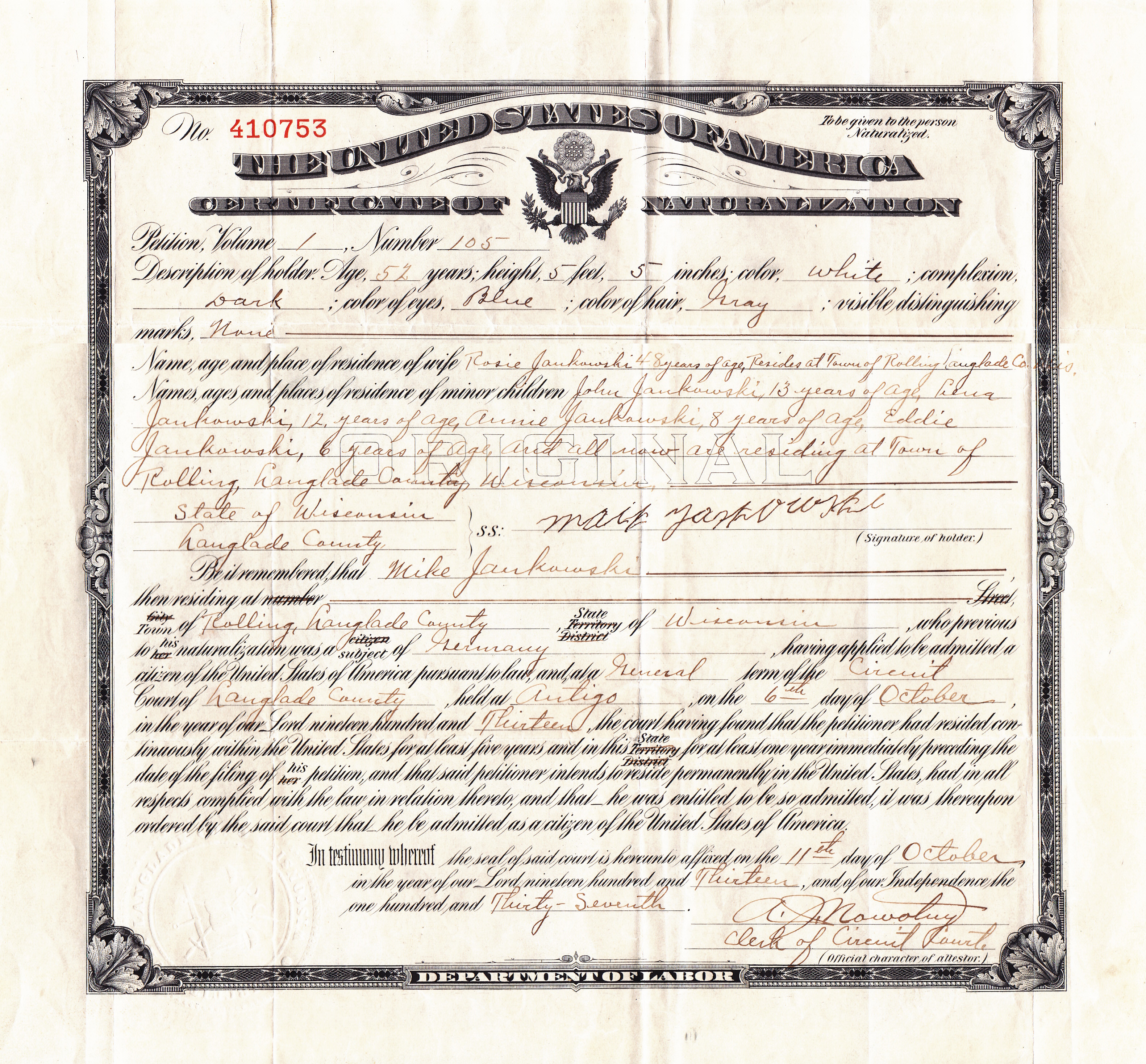
- Issue a certificate of naturalization to every naturalized person (and name all members of the primary subject’s family who derived citizenship from the naturalization);
- Create certificates of naturalization using standard forms distributed by the Naturalization Service which controlled the content, format, and quality of the records;
- Submit a duplicate copy of every certificate of naturalization to the Naturalization Service for filing in a Certificate File (C-File); and
- Only issue replacement or duplicate certificates with approval of the Naturalization Service.
Every person naturalized between September 27, 1906, and March 31, 1956, has a Certificate File (C-File) with the United States Citizenship and Immigration Services (USCIS) containing a copy of their certificate of naturalization. When the Naturalization Service received the duplicate copy of a certificate of naturalization, it opened a unique C-File to hold the new citizen’s naturalization records.
To be naturalized, the immigrant had to be a resident in the United States for 5 years and a 1 year resident in the the state. The act of 1906 also established the basic 3-step procedure required for aliens to become naturalized:
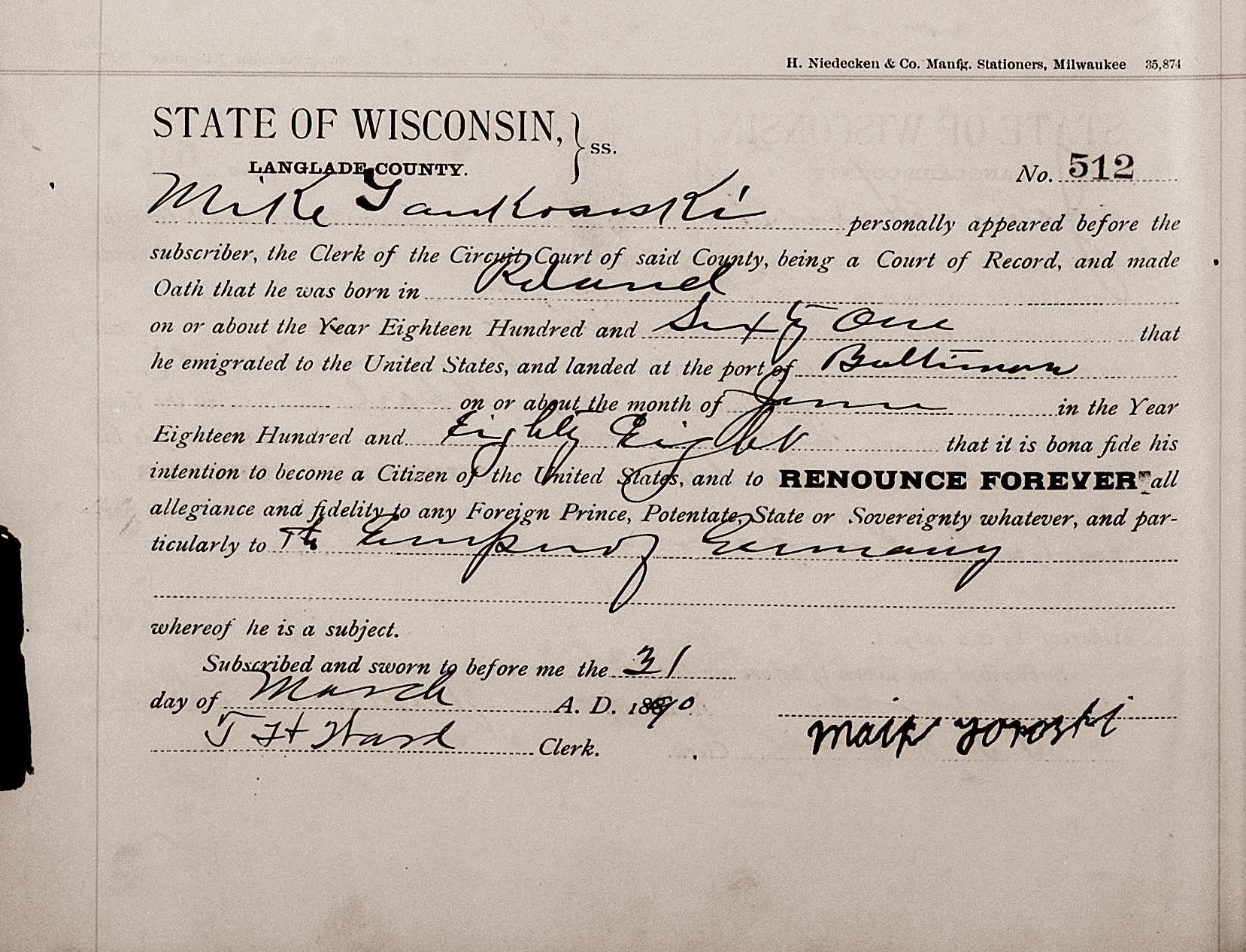
Declaration of Intent (also called first papers) was filed by the immigrant to renounce allegiance to foreign governments and to later prove he or she had resided in the country long enough to apply for citizenship. The immigrant could declare any time after he arrived after fulfilling the residency requirement. Generally, this was done within 2 years of arriving, but some immigrants waited as long as 20 years to begin the process to become a citizen.
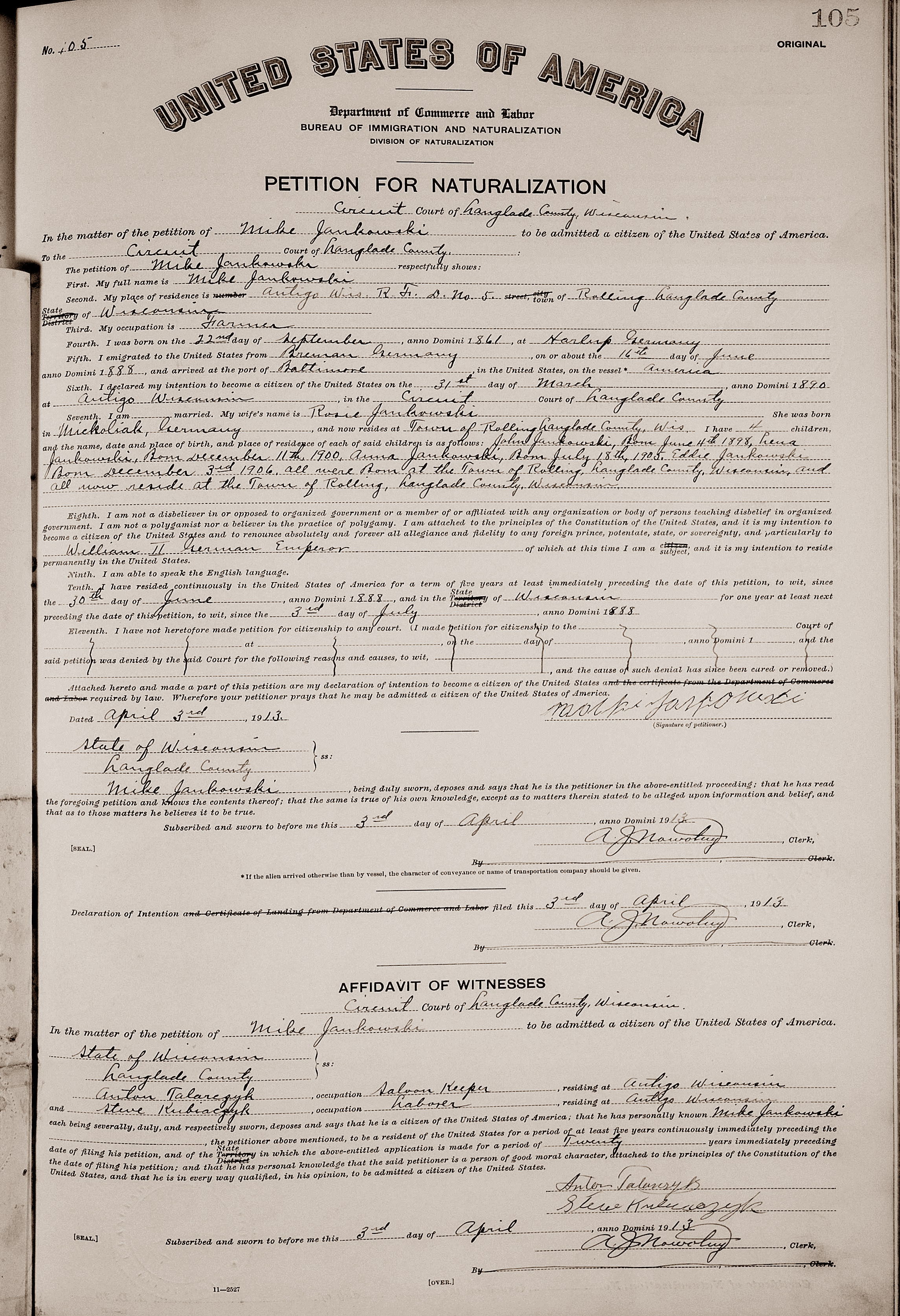
Petition for Naturalization (also called second or final papers) was filed between 2 to 7 years after the declaration of intent. Most often the petition was filed in a court nearest to the town where the immigrant settled. With the Petition, the immigrant presented affidavits of two witnesses with personal knowledge of the applicant, stating that the applicant had resided in the United States for at least 5 years and possessed a good moral character. Later petitions provide a treasure trove of information on the petitioner and his family.
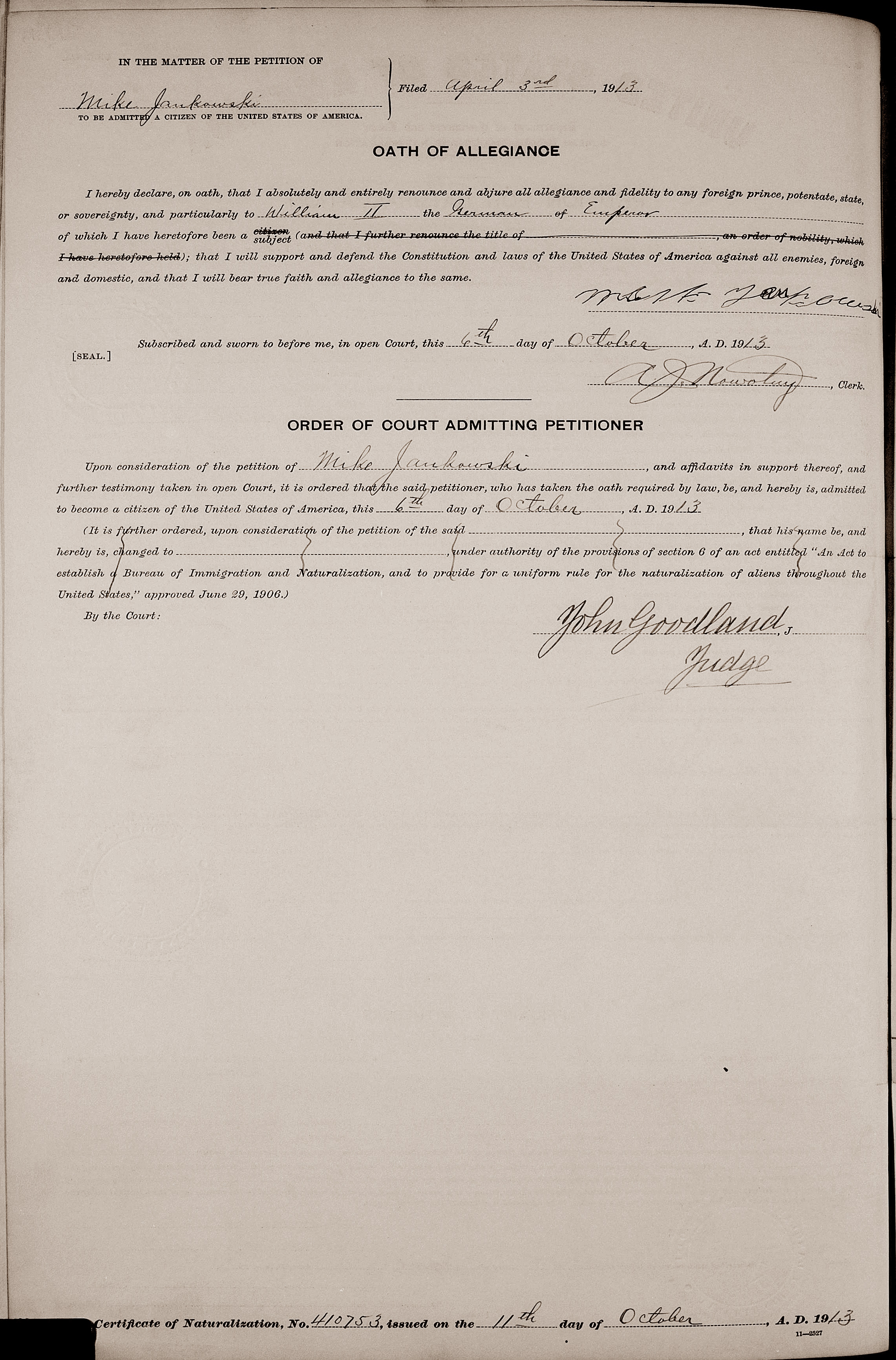
Oath of Allegiance. If the judge found the recommendation of naturalization officials favorable and satisfactory, the applicant would take an Oath of Allegiance to the United States Constitution and renounce all foreign allegiances. The immigrant was then sworn in as a citizen and issued a Certificate of Naturalization. The certificate was given from the same court the petition was filed in. The immigrant was now a naturalized citizen of the United States.
Naturalization Papers of Mike Jankowski Declaration of Intent Petition for Naturalization Oath of Allegiance Certificate of Naturalization Other Significant Naturalization Acts
On May 9, 1918, Congress passed an act (40 Stat. 542) stating that any alien who had been a member of the Armed Forces for 3 or more years could file a petition for naturalization without proof of the 5-year residency requirement, and that any applicant who had been in the service during World War I was exempt from the requirement to file a declaration of intention.On September 22, 1922, Congress enacted a law that changed the naturalization procedure for married women. Before that date, women who were married to a U.S. citizen or naturalized citizen automatically became U.S. citizens by reason of the marriage. The new law required that any woman married after the date of enactment who desired to become a citizen must meet the requirements of the naturalization laws. No declaration of intention was needed, however, and the period of required residence was reduced from 5 years to 1 year.