
Why Wisconsin and Michigan?
...and what's up with Georgia??
In 1836, the United States and the Menominee Indian Tribe signed the Treaty of the Cedars. A vast area from today's Upper Peninsula of Michigan through northeastern Wisconsin and all the way down into central Wisconsin was the traditional territory of the Menominee. With this treaty, the Menominee ceded about 4 million acres to the United States for $700,000. The agreement opened that huge tract of forest to logging and sparked significant growth.
This new tract of land would shape the states of Wisconsin and Michigan and the counties of Langlade and Winnebago among many others. Cities began springing up including Menominee (Michigan), Oshkosh, Neenah, Menasha, Appleton, Stevens Point, and many others. The railroad would quickly follow and growth continued unabated.
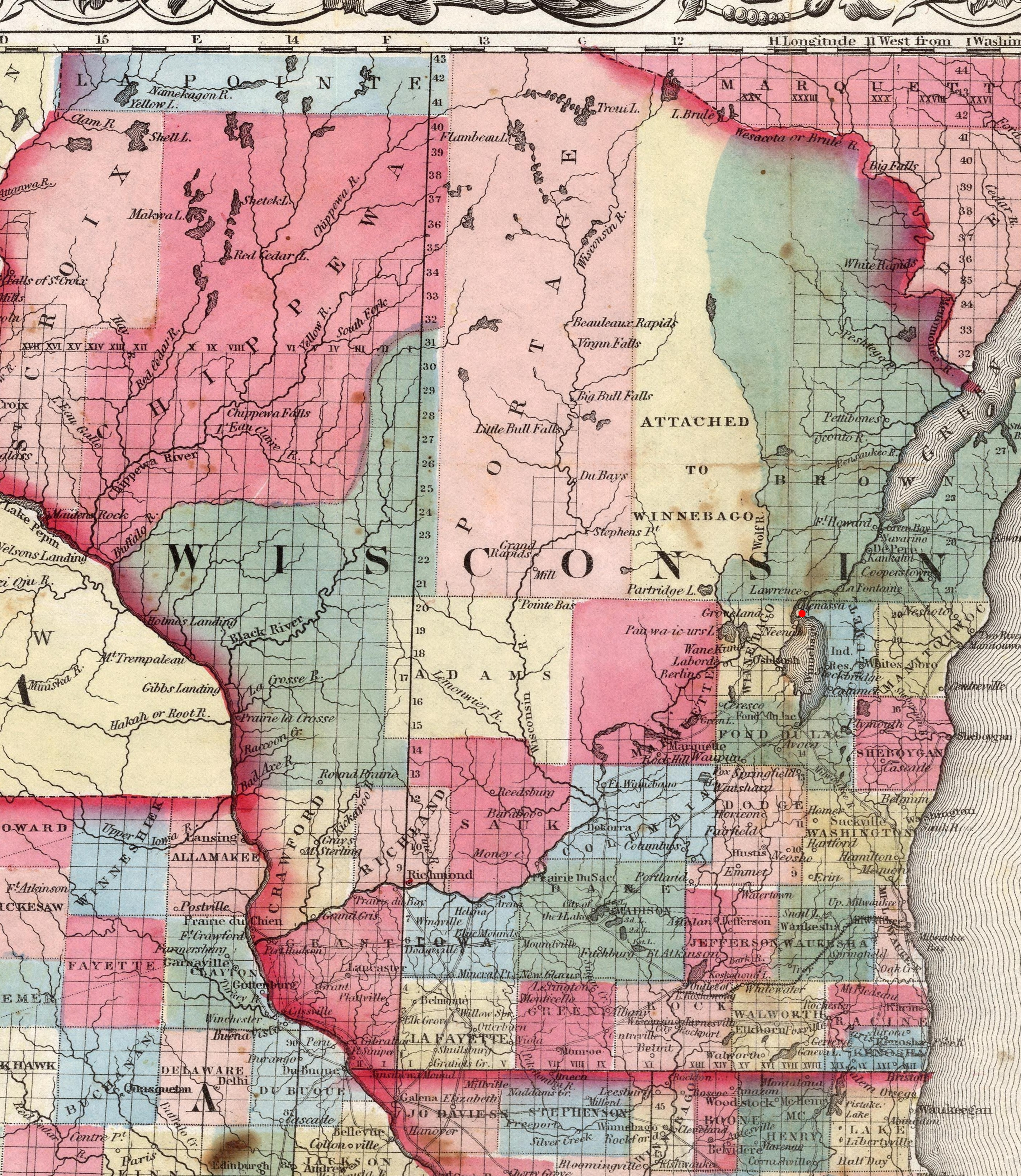
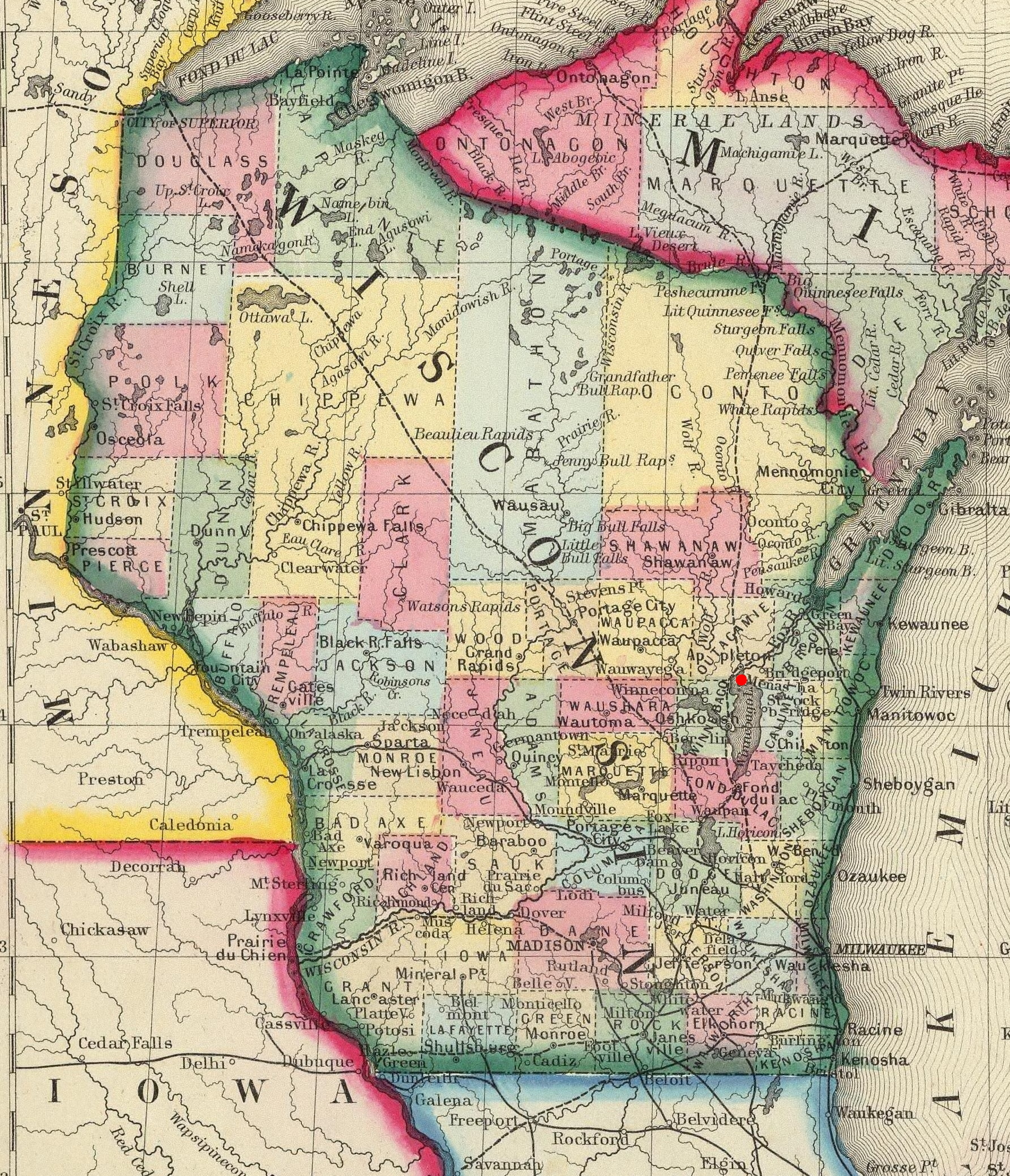
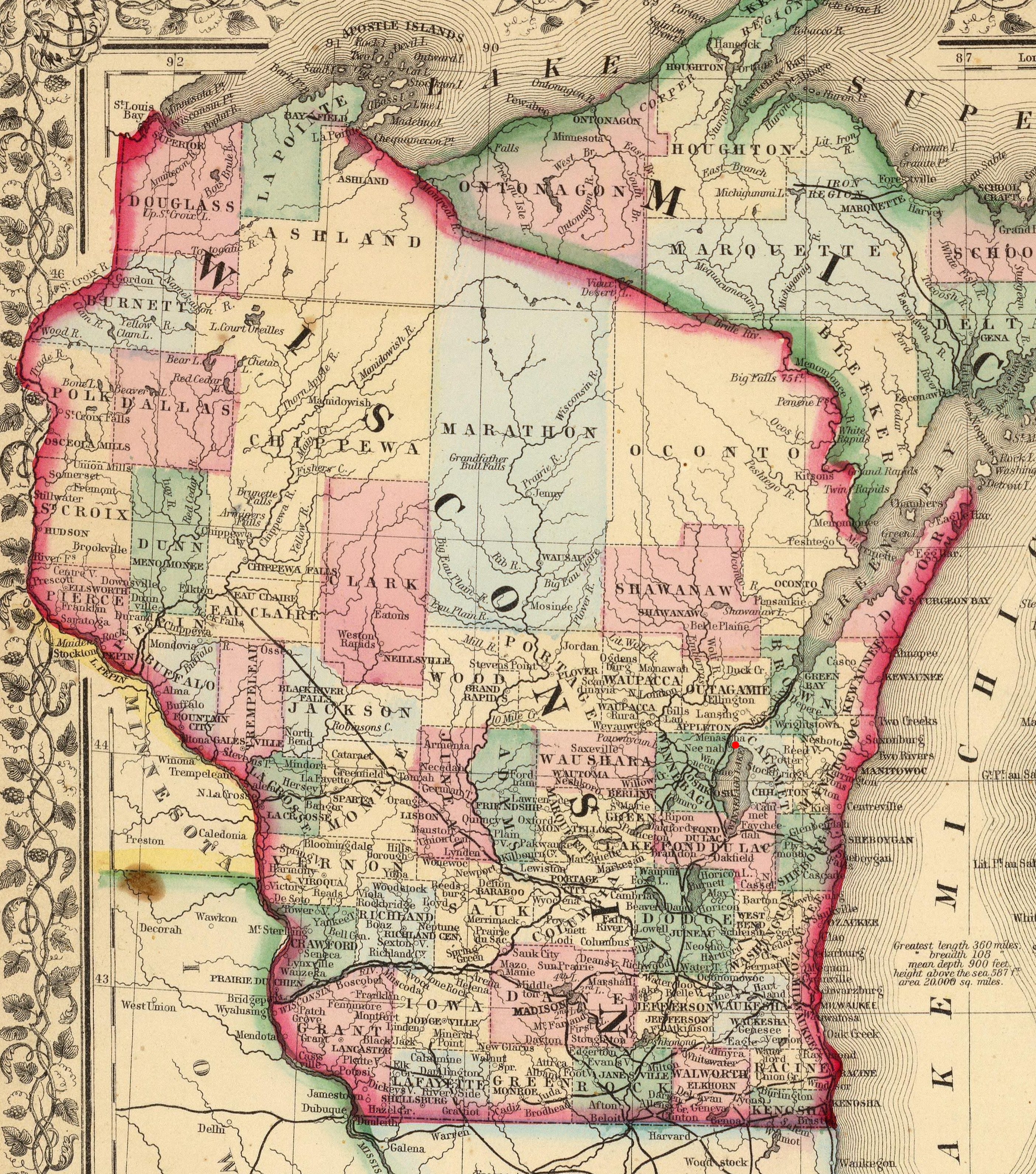
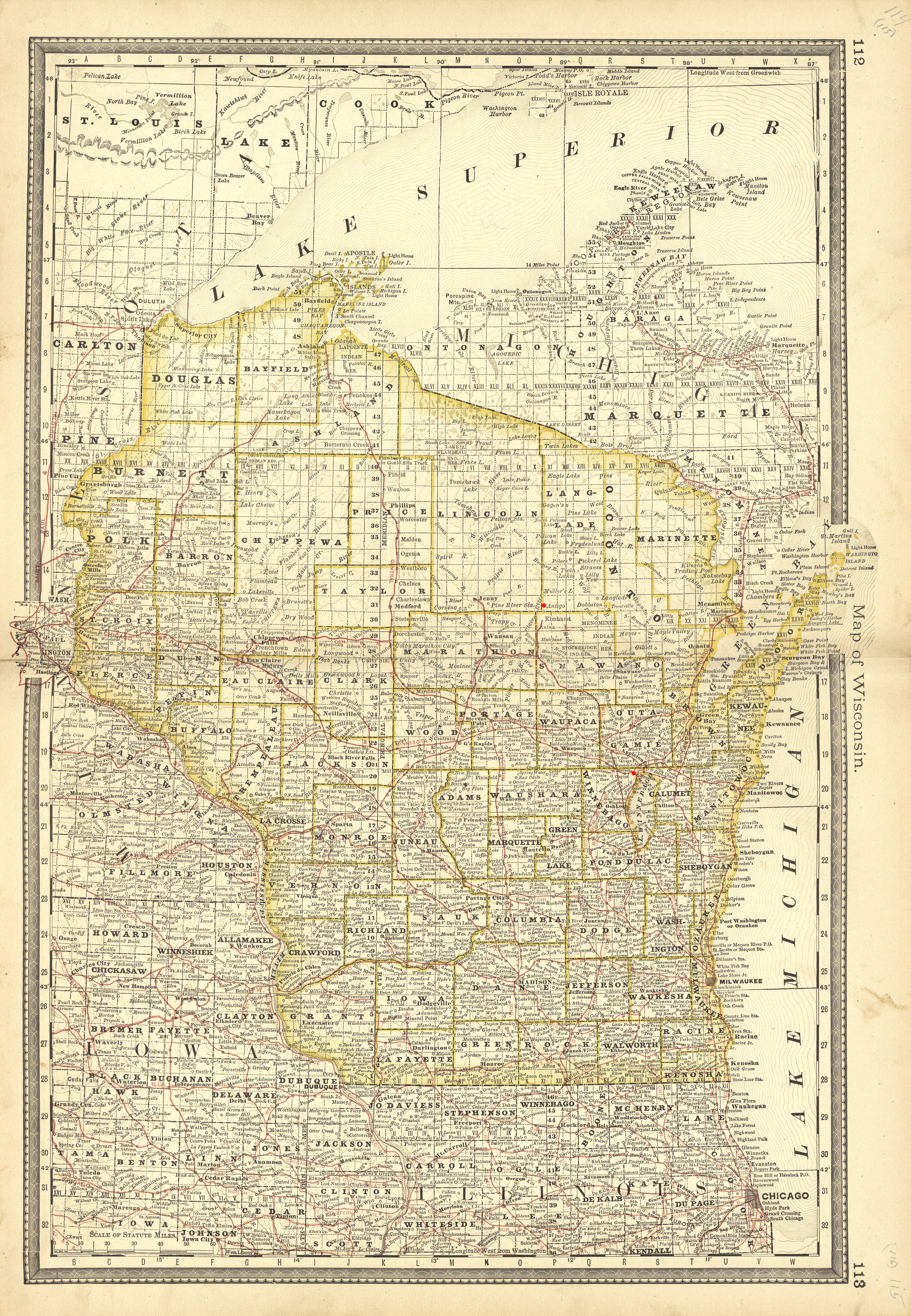
In the late 1800's, the "western United States" consisted of what we call the Midwest today. Michigan became a state in 1837, and included the Upper Peninsula. Wisconsin had just become a state in 1848. The UP and the northern part of Wisconsin were still largely unsettled and populated by Indian tribes. The following maps show the impending growth of the state of Wisconsin from 1850 to 1890. Particularly large growth is noted between 1880 and 1890 - the decade which saw our ancestors immigrate to Wisconsin. Even those who settled in Menominee, Michigan most likely did so via Wisconsin. Much of the growth can be attributed to the Homestead Act of 1862.
 |
 |
 |
 |
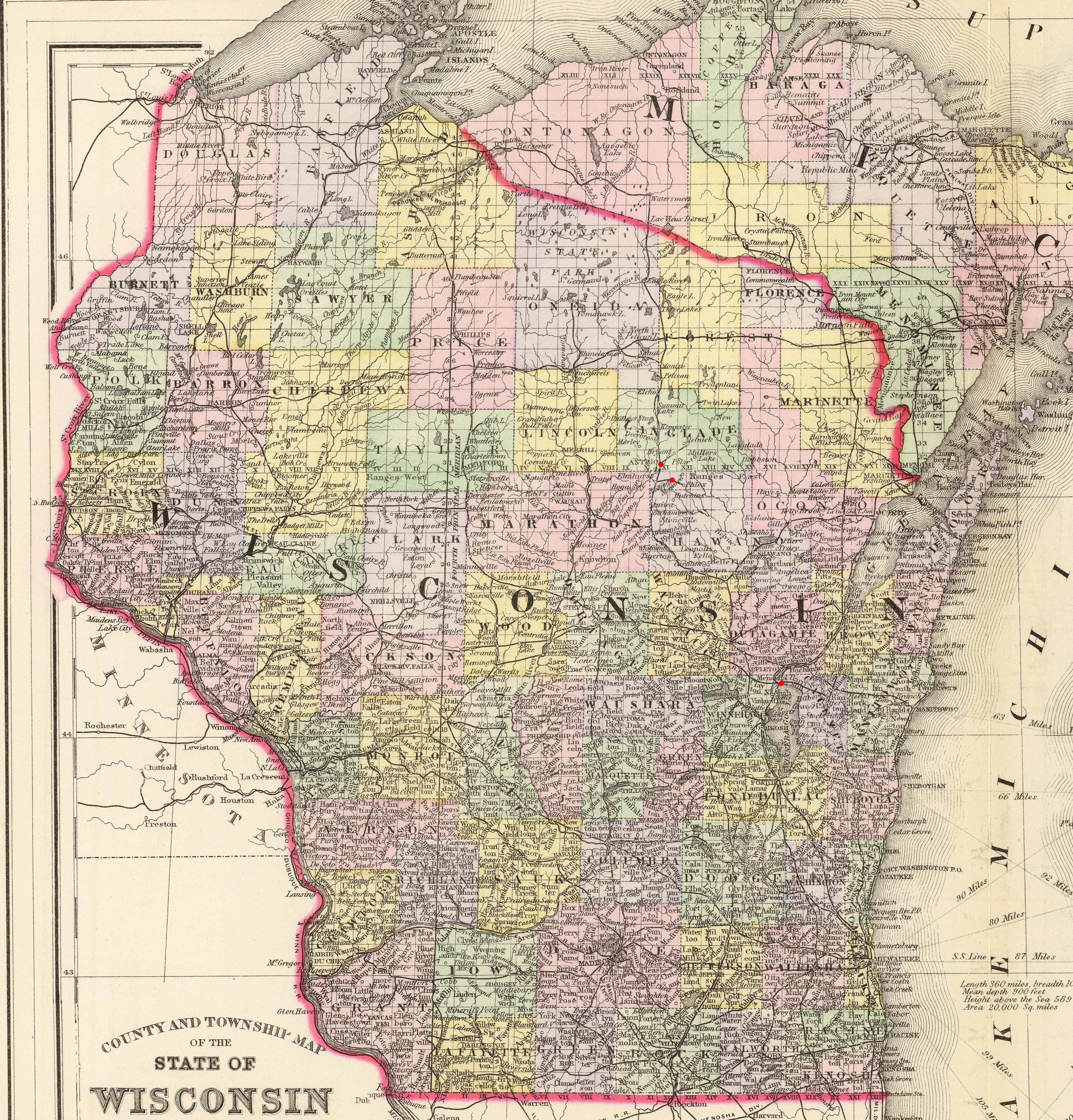 |
| 1851 Neenah and "Menassa" first recognized |
1860 state continues northward expansion; Marathon, Shawano counties incorporated |
1870 not much has changed since 1860 |
1881 Langlade County and Antigo noted for first time; train has not yet reached Antigo |
1890 the state has exploded as several additional counties are incorporated |
The Homestead Act of 1862 encouraged people to settle west of the Mississippi river. The act provided that a man could earn title to 160 acres simply by living on them and cultivating them for five years. During the 1880's, the state of Wisconsin was opening up for farming and development and was a desirable destination for many Poles. While the wages of farm hands in Wisconsin was relatively low, better wages were paid in the woods, on the river, and in the saw mills. Here, from $15-20 or more per month could be earned. These opportunities were embraced by large numbers of Poles, many of whom earned enough within a few years to buy one or more forties of land. Often such labor was the winter employment of the Polish farmer, and in other cases the hard work of clearing the land was left to the wife and children, while the husband earned wages in some kind of lumbering operation.
There is no evidence that any effort was put forth by the state of Wisconsin to directly induce Polish immigration. The Wisconsin Central Railway never distributed printed material relating to Polish settlers. German laws, in effect in Prussian Poland, did not permit any efforts to be made to induce immigration. The most persuasive argument to induce immigration was a letter from a person already in the United States and pleased with circumstances. The majority of Polish emigrants in the late 1800's, most likely including our ancestors, came to America on the recommendation of others who had come before them.
For the Poles, their destination was almost always one of the already established Polish settlements, such as Chicago, New York, Pittsburgh, Buffalo, Milwaukee, Detroit, Cleveland, and Philadelphia. Milwaukee was one of the most important Polish centers, with 58,000 immigrants by 1902 and 90,000 by 1920. Most came from Prussian Poland, and became blue-collar workers in the industrial districts in Milwaukee's south side. They supported numerous civic and cultural organizations and 14 newspapers and magazines.
Generally speaking, Poles were seen by Americans as industrious, hardworking, and productive. They had created ethnic communities that were stable and successful, and did not venture out into larger professions. Polish Americans eschewed intellectualism and pursued money through hard work and thrift. They gained a reputation for "chasing the dollar", but were honest and reliable in their pursuits.
In 1862, the Chicago & Northwestern Railroad expanded from Milwaukee to Winnebago County and Menasha. Menasha was already booming as a natural location for the manufacture of paper and wood products. The seemingly unlimited supply of natural resources from the pine and hardwood forests of northern Wisconsin, coupled with water power from the dam and water transport to points southward made Menasha a very desirable place to do business. The city was incorporated in 1874 and by 1880 it already had several factories including: Menasha Hub and Spoke, the immense Menasha Wooden Ware, three flouring mills, Menasha Woolen Mills, sash, door, and blind factories, two iron works, machine shops, saw mills, broom handle factory, barrel factory, brickyards, a furniture factory, two breweries, and more. And the paper industry, which would eventually supplant all other industry in Menasha, was just in its infancy with only a single small paper mill. Jobs in Menasha were plentiful and would be for the foreseeable future. It only seems inevitable that Menasha would attract Polish immigrants. On the whole, the Poles were welcomed and their numbers exploded in the 1880's. Our own Zielinski, Brodzinski, and Lewandowski ancestors all eventually settled in Menasha.
In December of 1871, the Wisconsin Central Railroad began further expansion north and west with runs between Menasha and Stevens Point. Nearly 10 full years later, the first train rolled into Antigo on August 15, 1881. Antigo was a lumber town and was incorporated in 1885. Sawmills were plentiful and so were jobs. Additionally, the countryside surrounding Antigo was still virgin forest and up for sale by the U.S. government. An immigrant could work in the sawmills or in the forests felling trees and very quickly make enough money to purchase some of that surrounding land. It is believed that that was exactly what Mike Jankowski did. Constantin's son was the first to come to the area. The rest of the family would soon follow, no doubt financed through Mike's hard work. Acreage was purchased in the township of Rolling, just south of Antigo. It is here that the Jankowski family gained its foothold in the New World. Part of this original land purchase still remains in the family to this day. Antigo and Langlade County never received anywhere near the number of Poles as Menasha or other Wisconsin localities. Nevertheless, it proved very beneficial for our ancestors.
Lumber seekers continued moving northward through the virgin forests and the railroads followed. In 1871, the Chicago & Northwestern Railroad completed a track from Green Bay to Menominee, Michigan. A year later, the line was extended further north to benefit from the iron mines opening around present-day Iron Mountain, Michigan. The city of Menominee gained prominence in the late 19th century as a major lumber town and was chartered in 1883. In its heyday, it produced more lumber than any other city in the United States. By the 1900s, Menominee was booming with a population of 16,000. It had sewer, water, and electrical systems, streetcars, and several opera houses. This growth spurred a massive demand for labor and the immigrants kept coming, including some of our Brodzinski ancestors.
In January of 1884, John Lewandowski and family, including daughter Rosa (Lena's future Ma), immigrated to the United States. They arrived in New York and went immediately to Savannah, Georgia either by steamship or train. They lived on York Street in Savannah for 2-3 years. Whatever the reason was that took them to Georgia has been lost to time. John was a farmer, but they didn't do any farming in Savannah. Son Franz was listed as a shoemaker by trade, and most likely their was work for him in Savannah. It stands to reason that his work provided the income that would eventually allow the family to move to Menasha in 1886 or 87.
At this time, 20 years after the end of the Civil War, Savannah was an older, well-established city that had been spared destruction during the war. General Sherman dubbed it too pretty to burn. The fact that the town fathers freely surrendered the city also helped. Savannah's population swelled after the war with the influx of thousands of freed slaves. This led to racial tensions and a competitive job market - certainly not a welcoming atmosphere for a newly arrived Polish family who probably spoke very little, if any English. Life in Savannah for the Lewandowski family was no doubt difficult and the move to Wisconsin must have brought much relief.